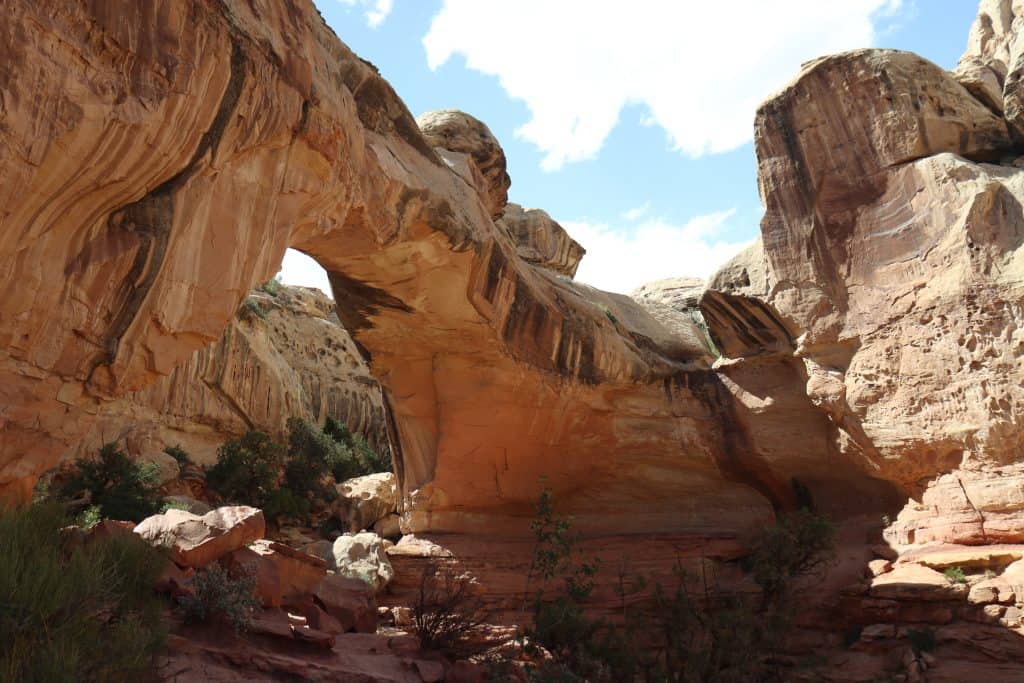
There’s something otherworldly about driving into Capitol Reef National Park. The cliffs start to close in, the red rock glows under the desert sun, and every mile feels like a drive through another planet. It’s one of Utah’s least crowded parks — but that’s what makes it special.
When I visited, it was part of a larger Southwest loop with Tortuga Blanca, my truck camper, and it instantly became one of my favorite stops. Capitol Reef might not get the hype of Zion or Arches, but if you love wide-open desert, starry nights, and the kind of silence that makes you feel small in the best way — this place will grab you.
Why Visit Capitol Reef?
- One of Utah’s “Mighty 5” National Parks, but far less crowded than Zion or Arches.
- Known for its Waterpocket Fold, a 100-mile-long wrinkle in the earth’s crust.
- Unique mix of geology, history, and culture — from Fremont petroglyphs to pioneer orchards.
- Perfect park for road trippers and overlanders (easy to explore by scenic drive).
💡 Pro Tip: Pair Capitol Reef with Bryce Canyon or Arches if you’re doing a Utah road trip loop.
Exploring Capitol Reef’s Scenic Drive
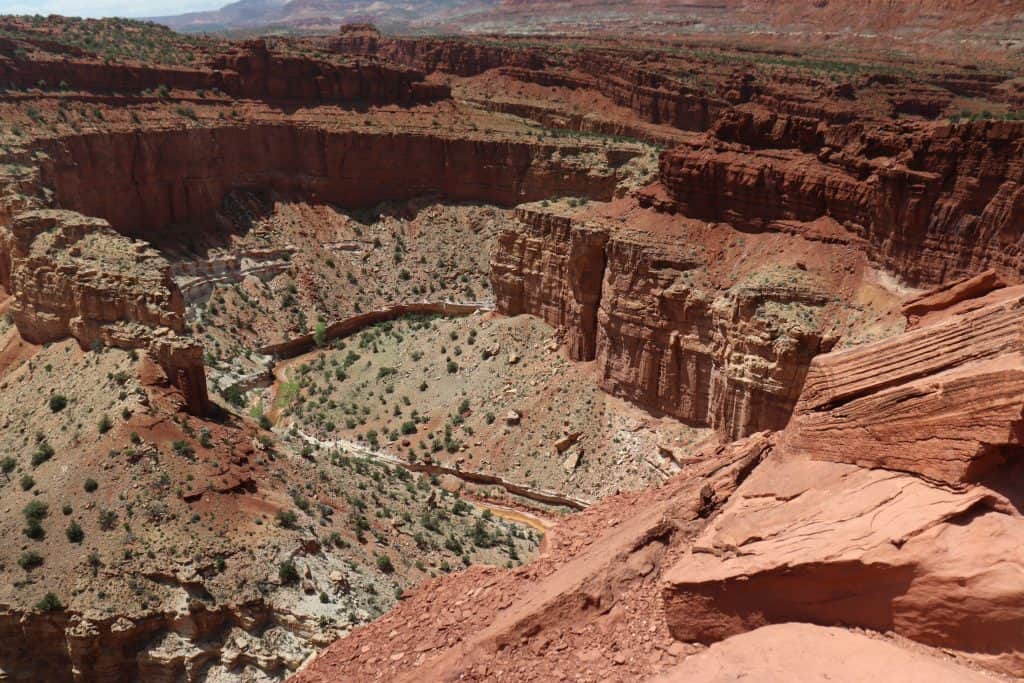
The main scenic drive through Capitol Reef National Park stretches about 8 miles one way, starting near the visitor center and winding through massive sandstone cliffs and canyon walls. Along the way you’ll find pull-offs to viewpoints, historic sites, and short hikes.
One of the best stops is the Grand Wash Trailhead, where a dry riverbed cuts between towering canyon walls that seem to glow at sunset. It’s a fairly easy hike, but bring water — desert heat sneaks up fast.
You’ll also pass through Capitol Gorge, where the old dirt road takes you deep into the canyons. Keep an eye out for the Pioneer Register — historic names carved into the rock by settlers traveling west in the 1800s.
Top tip: Drive the loop later in the afternoon. The golden light brings out deep reds and shadows that make every photo look cinematic.
Cathedral Valley Scenic Backway: A Full-Day Desert Loop
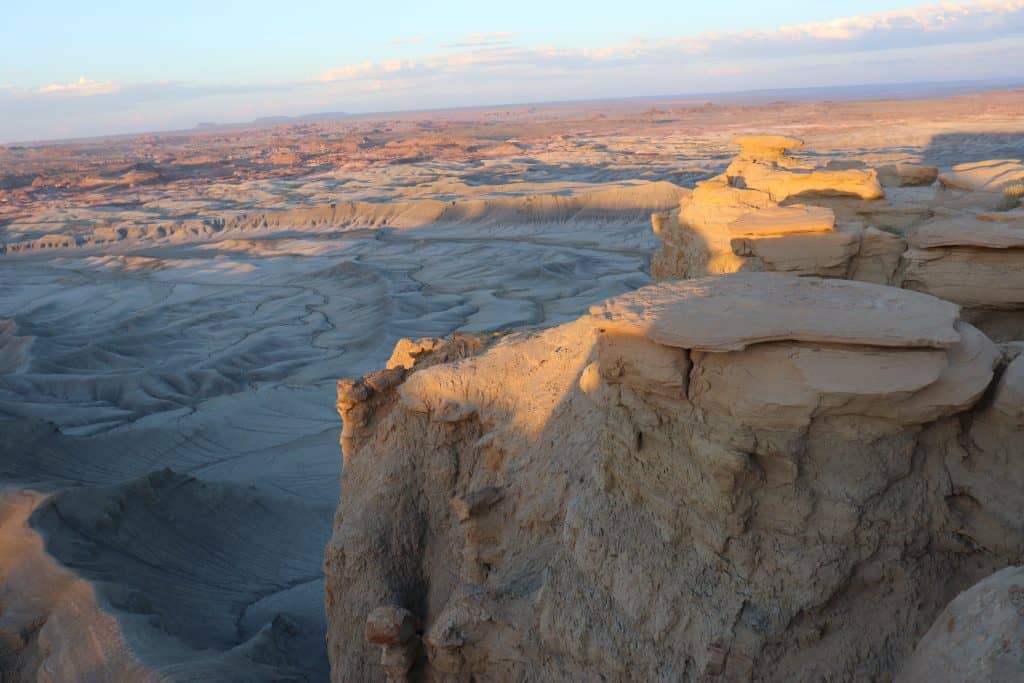
If you thought Capitol Reef was wild, Cathedral Valley feels like stepping off the map. This remote backcountry loop is legendary for its monoliths, badlands, and solitude. It’s not easy, but it rewards every mile. Here’s a guide.
Overview & Route Logistics
- The Cathedral Valley Loop is ~57.6 miles (92.7 km) of dirt and graded road, usually driven clockwise.
- From UT-24, about 11.7 mi east of the visitor center, you turn onto Hartnet Road, drive ~27.8 mi to Hartnet Junction, then turn north onto Cathedral Road for ~29.9 mi back to UT-24.
- Expect the full drive (with side stops) to take 6–8 hours (or more, depending on conditions and detours).
- Some sources say including all detours and exploration, the loop can reach ~65.6 miles in total.
- The road is unpaved; many sections are rough, sandy, or rocky. High clearance is required, and 4×4 is strongly recommended.
- River crossing: Near the Hartnet Road start, you’ll need to ford the Fremont River (no bridge). Depth and conditions vary. Many guides recommend doing the loop clockwise so you tackle the river crossing early.
- The roads can become impassable when wet, especially in bentonite clay sections. After rains or storms, avoid the route.
- Always check road & river conditions before heading out. The park advises calling 435-425-3791 (press 1 then 4) for updates.
Key Stops & Side Hikes
These are the high-impact stops you’ll want to include. Depending on how many you do, the day gets long fast.
| Stop | Distance / Trail Length | Why It’s Worth It |
| Upper South Desert Overlook | ~0.5 mi (one-way spur) | Big vistas into the South Desert; especially dramatic light during early morning or late afternoon. |
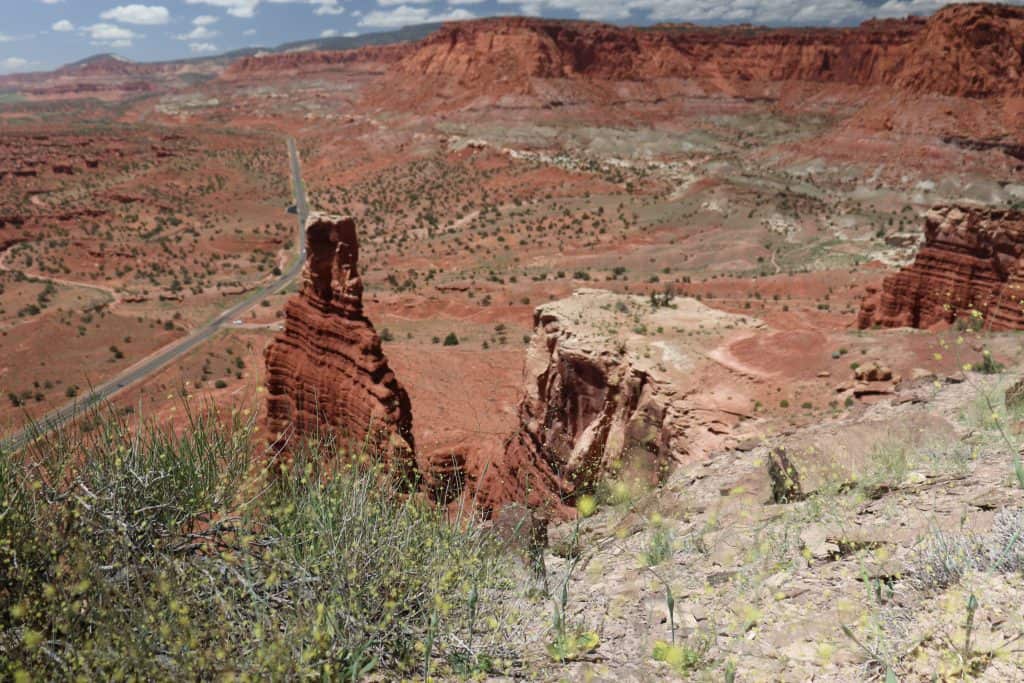
| Upper Cathedral Valley Overlook | <1 mi spur | Offers a sweeping panoramic view of the valley and monoliths before dropping down into the valley floor. |
| Cathedrals Trail | ~2.4 mi round trip | Follows a low ridgeline parallel to a row of monoliths known as “The Cathedrals.” |
| Lower Cathedral Valley Overlooks | 1.5–2.5 mi round trip | Moderate hike talking you through badland scenery and to viewpoints around the monoliths. |
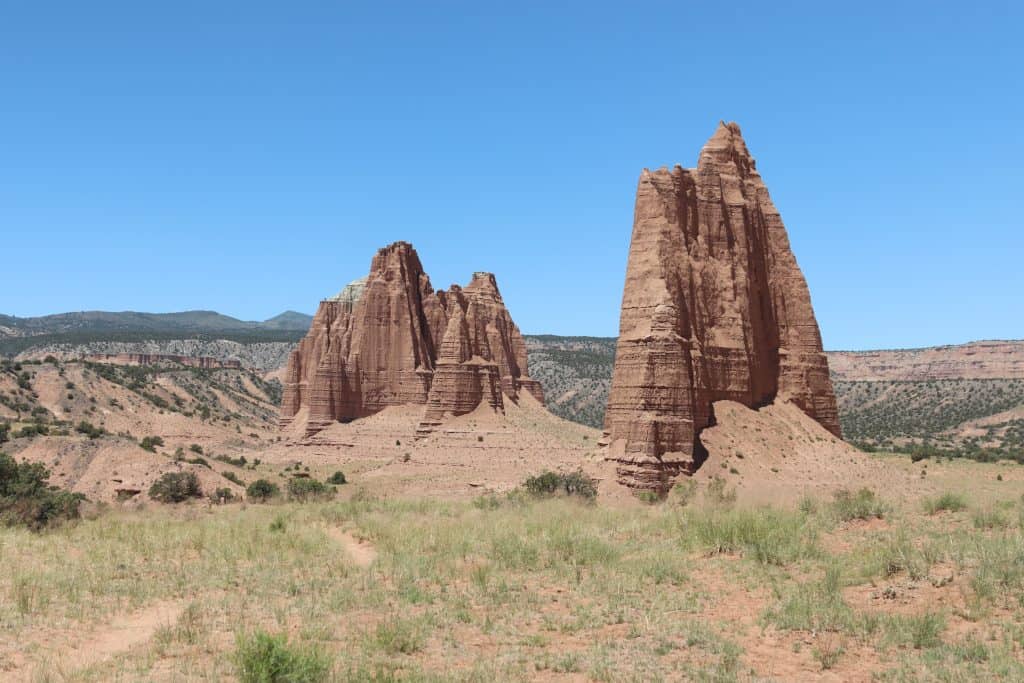
| Temples of the Sun & Moon | short walk from the spur road | Possibly the most iconic formations on the loop. The spires formed from Entrada sandstone draw photographers and explorers alike. |
| Glass Mountain | side detour | A mound of selenite (gypsum crystals) that glints beneath the sun — a hidden “crystal mountain” in the desert. |
| Gypsum Sinkhole | short stop off route | A sizable collapse feature—it feels surreal to peer down into its depth in the quiet desert. |
| Morrell Cabin / Historic Corral | short walk spur | If you’re into history, the Cathedral Valley Corral (built c. 1900) is part of ranching heritage in these remote parts. |
Suggested Day Itinerary (Clockwise)
Here’s a route that balances drive, stops, and light hiking:
- Begin at Hartnet Road off UT-24 → ford the Fremont River
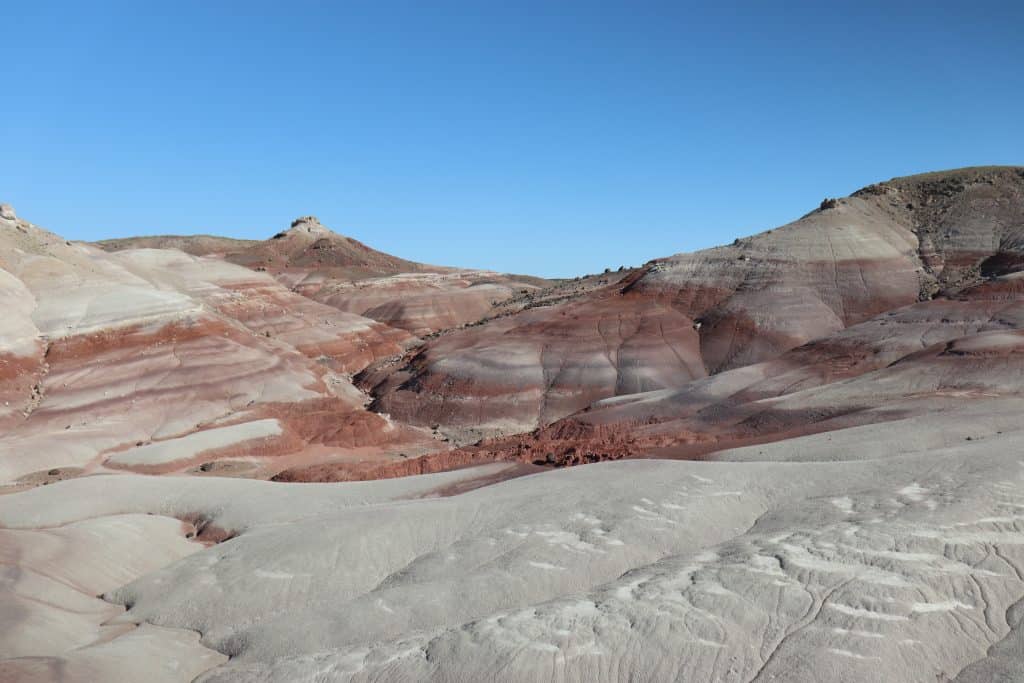
- Drive through Bentonite Hills / color clay exposures
- Stop at the Upper South Desert Overlook
- Take the spur to Upper Cathedral Valley Overlook
- Drop into the valley floor and drive toward the Temples of the Sun & Moon
- Detour to Glass Mountain
- Pause at Gypsum Sinkhole
- Hike the Cathedrals Trail or Lower Overlooks
- Swing by Morrell Cabin / Corral en route back
- Return via Cathedral Road to UT-24
This keeps you moving, but gives you breathing room for the scenic, iconic stops.
Packing List & Backway Essentials
To safely and fully enjoy Cathedral Valley, here’s what you want in your rig:
- High-clearance 4×4 vehicle (with skid plates if possible)
- FM / UHF radio or satellite communicator (cell is almost nonexistent)
- Hydration & extra water (fill before you leave pavement)
- Food / snacks / lunch (picnic style, since there are no services)
- Spare tire + jack + tire repair kit
- Air compressor / tire deflator (some sand & washes)
- Flashlight / headlamp (for unexpected delays)
- Paper map / topo / GPS (offline mode)
- Weather & road condition check that morning
- Basic tools, recovery gear (straps, shovel), gloves
- Sun protection (hat, sunscreen), layers for wind/cold
- Leave No Trace stuff: pack out all trash, bury human waste in remote spots if far from restrooms
- A full fuel tank before leaving Torrey or Fruita
Notes & Cautions
- The route is remote and exposed — no water, no shade, no gas stations once you drop off UT-24.
- The river crossing is unpredictable—low depth is safer, but in runoff times it can get tricky or impassable.
- Bentonite clay patches become a nightmare when wet: slick and sticky, they’ll easily trap a vehicle.
- Because you’re in a deep desert, check weather forecasts, especially for flash flood risk.
- If in doubt, don’t push it — turn back rather than damage your rig.
- Even in good weather, overall average speed is slow. Allow more time than you think.
- Share your plan / route with someone before you go.
Camping (If You Stretch It Overnight)
Cathedral Valley Campground (about 6 sites, first-come, vault toilet, no water; ~7,000 ft elevation). Killer night skies, total silence. Pack in/pack out.
Safety & Vehicle Notes
- High-clearance required; 4×4 often recommended, especially after storms or in sandy sections. Roads are unpaved and maintenance is infrequent.
- Do not attempt the river ford in flood/high water; confirm conditions first.
- Bentonite = no-go when wet. It turns to slick gum and strands vehicles quickly.
Fruita Historic District: An Oasis in the Desert
Just minutes from the visitor center, the Fruita Historic District feels like a completely different world — green orchards, cottonwood trees, and an old farmhouse surrounded by canyon cliffs.
Early settlers planted apple, pear, and peach orchards here, and the park still maintains them. If you visit in season, you can even pick fruit right from the trees. The contrast between bright green leaves and red rock walls makes this one of the most photogenic spots in the park.
Don’t miss the Gifford Homestead, where you can grab fresh-baked pies, jams, and local souvenirs — it’s a must-stop after a day of hiking.
Best Short Hikes
Capitol Reef has dozens of hikes for every level, but here are a few highlights worth mentioning:
- Hickman Bridge Trail – 1.8 miles round-trip to a massive natural arch overlooking the Fremont River.
- Cassidy Arch Trail – 3.5 miles round-trip, moderate climb with an unforgettable payoff (named after outlaw Butch Cassidy).
- Grand Wash – Easy walk through towering canyon walls, great for photos and shade.
- Cohab Canyon Trail – Winding slot-style canyon connecting Fruita and the scenic drive overlook.
Tip: Always check weather before hiking slot canyons — flash floods are no joke here.
Camping and Truck Camper Life
There’s one main developed campground inside the park — Fruita Campground — shaded by orchards and just steps from the visitor center. It’s one of the most peaceful national park campgrounds I’ve stayed at.
Sites are first-come or reservable in peak months, and there’s potable water, restrooms, and picnic tables.
If you prefer solitude, dispersed camping on nearby BLM land offers wide-open desert views and starlit nights that are impossible to forget.
I parked Tortuga Blanca on BLM land just outside the park and woke up to complete silence, the cliffs glowing pink at sunrise.
When to Visit & Travel Tips
- Best time to visit: Spring (April–June) and fall (September–October) for mild temps and fewer crowds.
- Summer: Hot but dry; great for photography, but hike early morning.
- Winter: Quiet and underrated — expect cold nights but beautiful solitude.
- Don’t miss: Gifford House pies, Fruita orchards, and a sunrise drive through the Scenic Drive.
- Nearby stops: Goblin Valley, Escalante, and Bryce Canyon if you’re doing the Utah Mighty 5 route.
Final Thoughts
Capitol Reef doesn’t need crowds or big city hype — it just needs open skies, quiet trails, and a traveler with time to explore. It’s the kind of park that sneaks up on you — understated at first, but impossible to forget.
Every time I think back to that trip, I remember the light hitting the cliffs at sunset, the sound of gravel under my boots, and how good it felt to just sit and take it all in.
Sometimes the best adventures aren’t the loudest ones — they’re the quiet places that make you feel small and alive all at once.